 Grice's attack
on piano 'a revelation' Grice's attack
on piano 'a revelation'
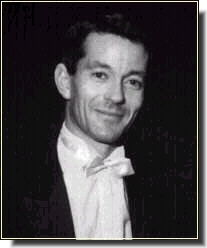
PARIS-BASED New Zealand pianist Jeffrey Grice performed
magnificently in a solo recital at the Wairarapa Arts Centre last Friday.
His programme comprised works by Brahms, Debussy and Bartok and the well-filled hall
responded with huge enthusiasm to the mild-mannered, unflamboyant recitalist. Quietly he
introduced each item with helpful comment about the genesis of it, or its structure and
place within the composers' work. He did this, he explained, partly to relax himself.
What the audience was therefore almost unprepared for, was the attack on the Wesley
grand piano's resources, beginning with the 45-minute-long Brahms Sonata No 3, Opus 5.
Grice's opening movement, with its vast majestic chordal sequence,
contrasting with a more lyrical subject, in Brahms’ high romantic manner, gave the
keyboard, particularly in the upper register, considerable stress. Not only those pinched
notes but the right sustaining pedal also nearly capitulated - so much so that its
knocking could clearly be heard throughout the following, more intermezzo-like, movement.
That is not to denigrate Grice's achievement in any way, because his
reading of the epic Opus 5 Sonata was masterly indeed, a tribute to the excellent training
he has had from a succession of famous teachers in Europe and Israel.
What impressed was his total imaginative control of the expressive
dynamics of the piece, from the rippling right-hand passages of the third movement to the
chorale-like introduction to the fourth, the huge crescendi to mysterious troll rhythms in
the minor key in the last movement.
The trio of Debussy pieces, Reverie, D'un cahier d'esquisses and L'isle
joyeuse, Grice explained, were chosen to show the composer’s development in the early
years of his century from simpler, salon melody of charm to the Cahier, which was much
more experimental in its use of the differing tone colours which Debussy explored, taking
the Impressionist painters as his model.
L'isle joyeuse, which Grice conjectured arose from a lyrical summer on the
island of Jersey, evoked through its full tone, speed and ever-changing tempi the sound of
rushing waters, the sea and snatches of dance festival.
Bartok's Out Doors Suite was written before the composer had to leave his
native Hungary before World War II. Its last movement, The Chase, is almost prescient in
its unremitting sense of terrified pursuit of a kind which overtook refugees such as the
composer.
The percussive style of Bartok, in the first movement of drums and fifes,
was contrasted with the following barcarolle, where depths of water were suggested, along
with rippling and dripping sounds.
The Musette sequence evoked bagpipes at a fair, the hurdy-gurdy, tile folk
instrument the cembalo, with is trills and metallic sound for dancing.
We so seldom hear Bela Bartok's piano works of genius played here, only
the simple children's pieces. Grice's interpretation of these contemporary masterworks
with such power and refinement was a revelation.
- Margaret Christensen in Wairarapa
Times-Age
December 13 1996 |